


 3109
Views
3109
Views 2 Min
Read
2 Min
Read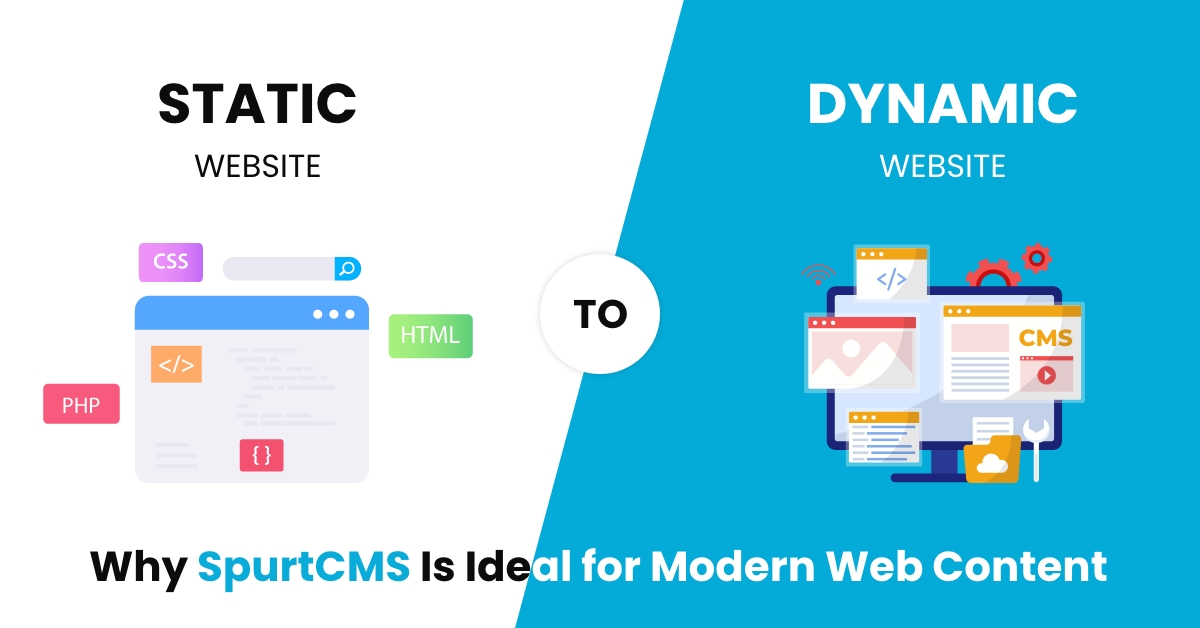
In today’s digital world, content must be flexible, immediate, and tailored to user needs. While static websites were once the standard, their limitations have become more apparent as the demand for dynamic and interactive experiences continues to grow. SpurtCMS offers a powerful and modern solution, helping businesses move beyond static pages to real-time content management.
Limitations of Static Websites
Static websites are simple to set up, but they lack flexibility. Every content change requires code-level editing, which slows down workflows and increases dependency on developers. There is no support for content approval, user roles, or scheduling. Personalization is nearly impossible, and scaling up for content-heavy platforms becomes time-consuming and inefficient.
SpurtCMS as a Dynamic Content Solution
SpurtCMS is built with a modern technology stack using Node.js and MySQL. It allows content to be stored in a structured way and served dynamically to users. The modular architecture makes it adaptable to different project requirements, whether it's a corporate website, a blog, or a full-fledged portal. The admin panel is designed for ease of use, giving non-technical users full control over content sections including banners, FAQs, and landing pages.
Real-Time Content Management
SpurtCMS enables instant content updates without the need for redeployment. Content creators can schedule articles, publish announcements, or make quick edits on the fly. With structured workflows and user permissions, teams can collaborate efficiently. This makes it ideal for marketing teams and businesses that frequently update content.
Developer Friendly and Scalable for Business
While SpurtCMS is user-friendly for content teams, it is also developer-focused under the hood. APIs allow for seamless integration with mobile apps, third-party systems, or custom features. The backend is flexible enough to scale with business needs, supporting both small websites and enterprise-grade portals.
Conclusion
Shifting from static to dynamic content is more than a technical upgrade. It is a move toward agility, efficiency, and smarter content control.
gives teams the tools to manage modern web content with speed and confidence, making it the smarter choice for businesses that value adaptability and growth.